
Bunion
What Is a Bunion?
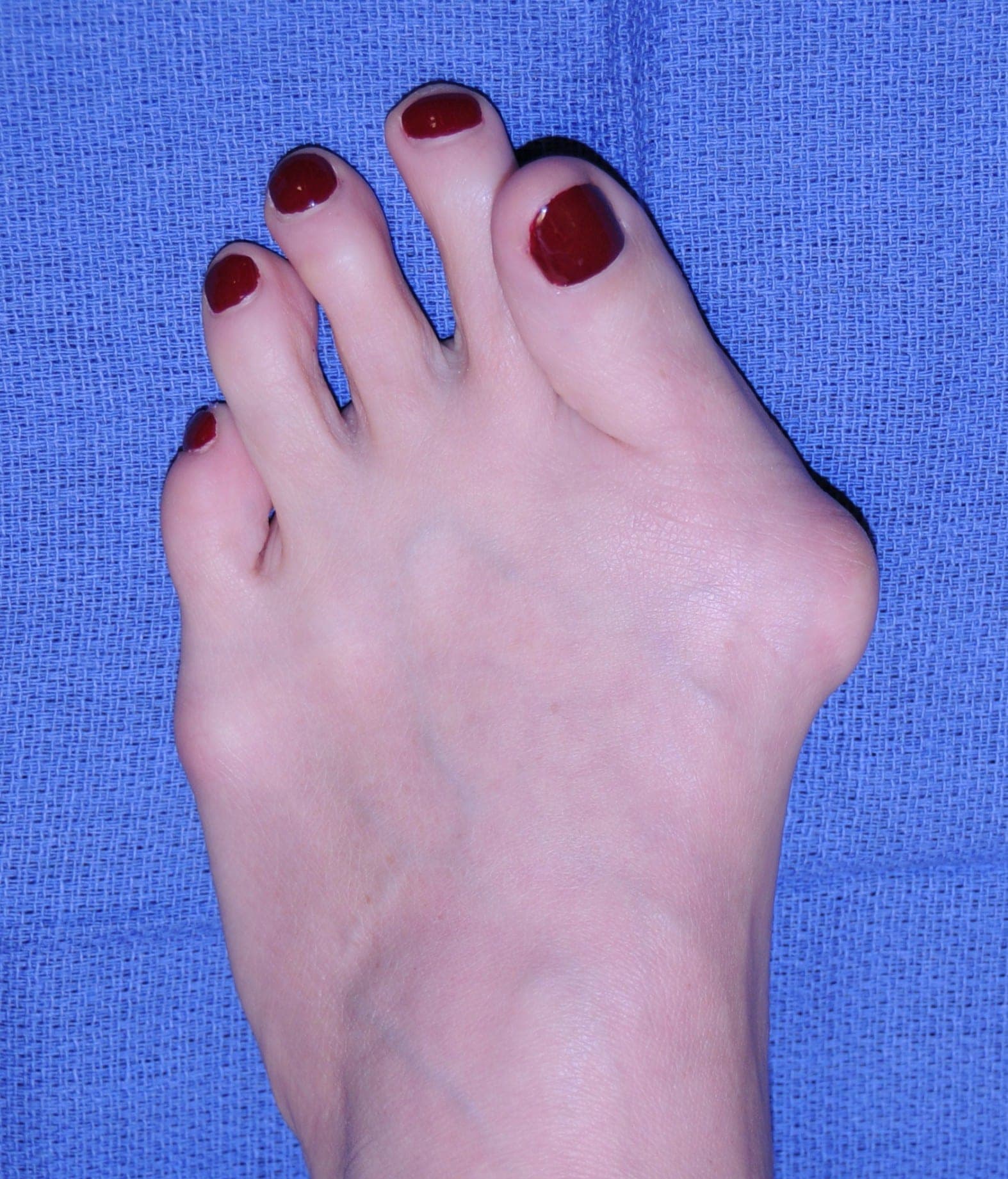
The visible bump is only the outward sign of a three-dimensional deformity involving the entire great-toe joint.
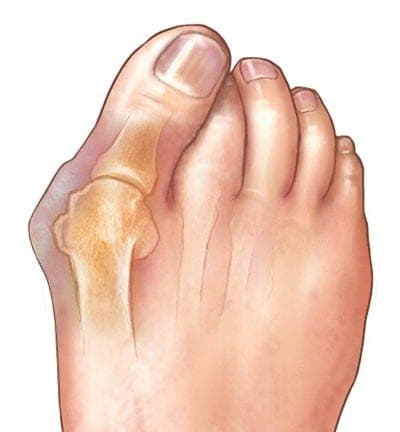
A bunion in the big toe.
A bunion is commonly described as a bump on the inner side of the foot near the great toe. That description is incomplete. The prominence develops as the first metatarsal and great toe gradually lose their normal relationship.
The first metatarsal moves away from the second metatarsal while the great toe drifts toward the second toe. The joint becomes misaligned, the sesamoid bones beneath the metatarsal head may shift out of position, and the tendons and ligaments begin pulling along abnormal lines of force.
The bump is therefore not simply extra bone growing for no reason. It is the visible result of altered mechanics and repeated pressure at a joint that is no longer centered.
| Mild | Moderate | Severe | Extremely Severe |
|---|---|---|---|
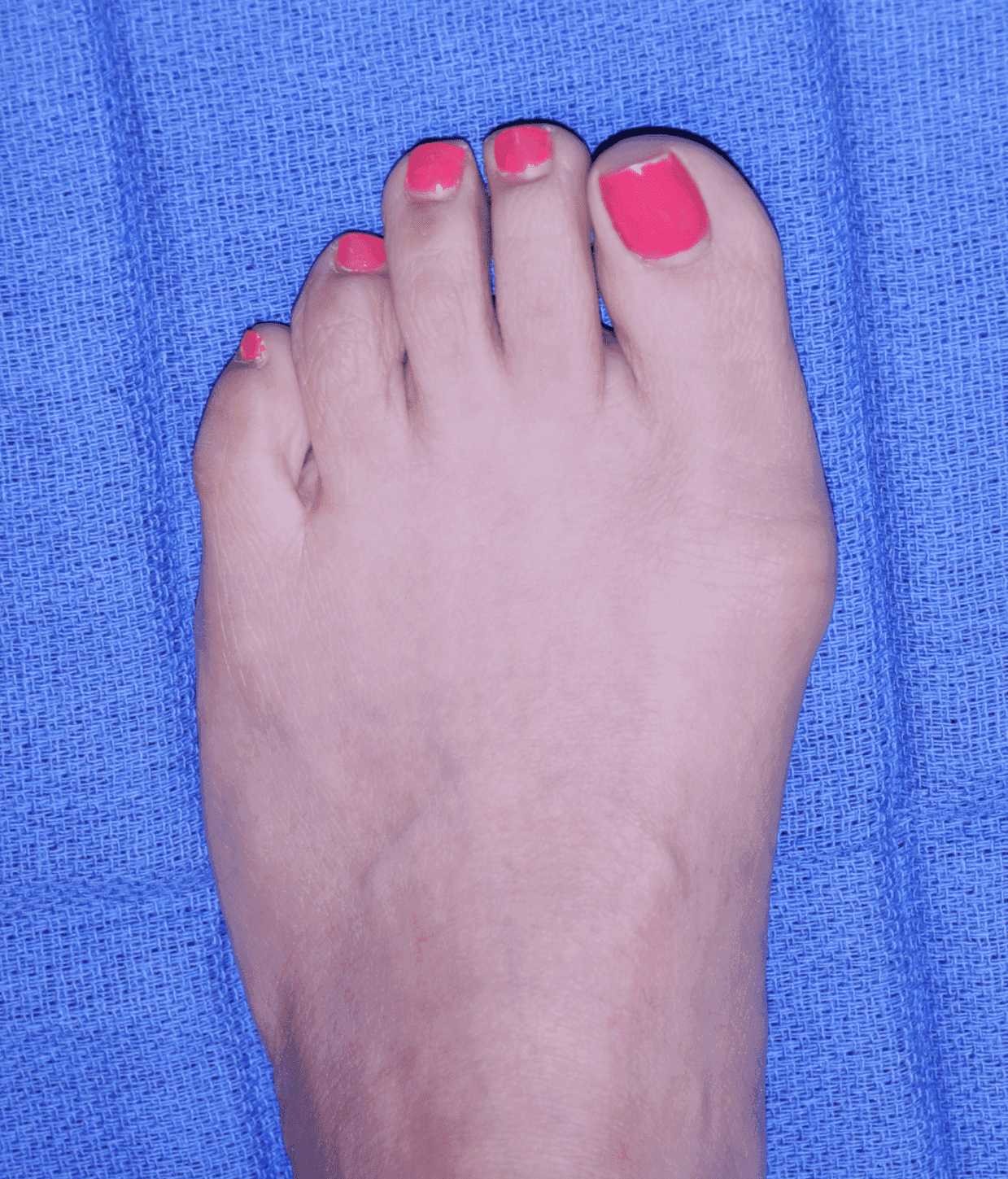 | 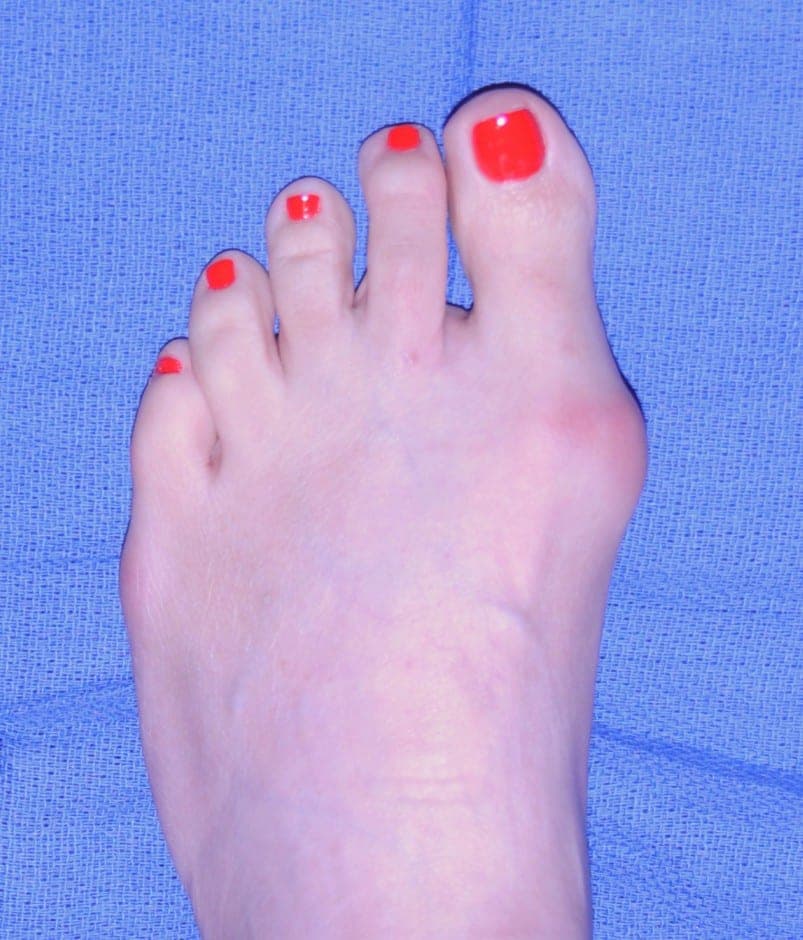 | 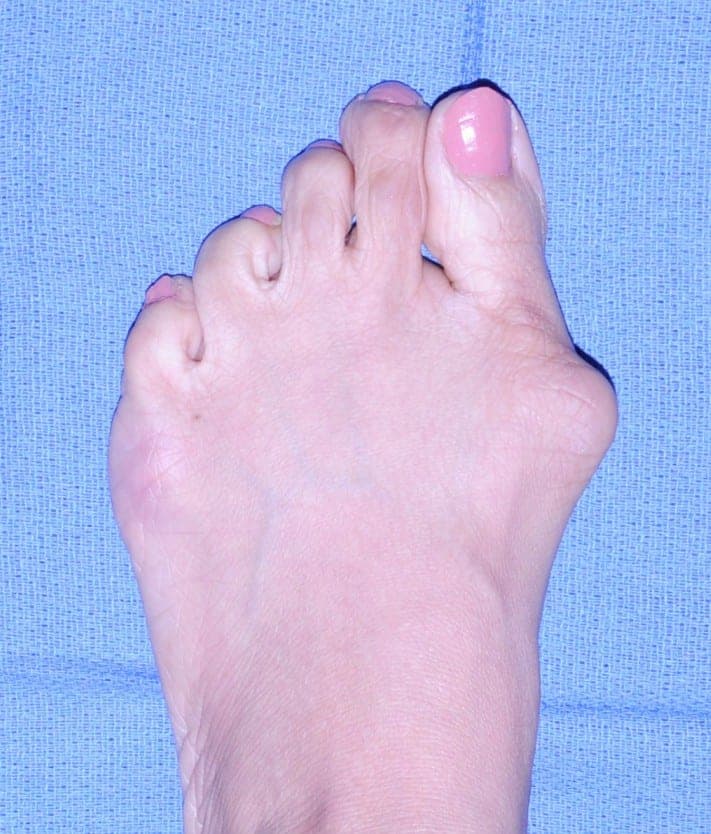 |  |
Why Do Bunions Develop?
Dr. Moy views most bunions as the expression of an inherited tendency toward instability, ligamentous laxity, abnormal foot structure, or imbalance within the first ray. Shoes can aggravate pressure and inflammation, but shoes alone usually do not explain why the joint has lost its alignment.
A patient may remember a parent or grandparent with a bunion even when other family members are unaffected. The inherited tendency can appear differently from one person to another and may progress at different rates.
Why Do Bunions Progress?
As alignment worsens, the first metatarsal, great toe, sesamoids, tendons, capsule, and ligaments reinforce the deformity. The joint may remain flexible for years or gradually become more rigid. Shoe pressure can inflame the prominence, but the deeper problem is the joint's inability to remain centered during weight-bearing and propulsion.
Progression is not identical in every patient. Some bunions remain relatively stable for long periods. Others enlarge steadily, become painful, reduce joint motion, crowd the lesser toes, or change the way pressure is distributed across the forefoot.
Can Nonsurgical Treatment Correct a Bunion?
Nonsurgical care can reduce pressure and temporarily relieve discomfort. Wider shoes, padding, activity modification, anti-inflammatory measures, and selected orthotic devices may make the foot more comfortable. However, these measures cannot move the first metatarsal and sesamoids permanently back into normal anatomical alignment. They may control symptoms, but they do not straighten the structural deformity. Surgery is the definitive method of correcting the bunion itself.
If you have a bunion, switching to shoes with roomier deep toe boxes, low or flat heels, and adequate arch support can reduce pressure and pinching in the meantime.
Custom orthotics, such as bunion pads or insoles, can be worn inside the shoes to relieve the pressure on the big toe by distributing your weight better. A trained podiatrist like Dr. Moy can recommend the best orthotic for you.
Mole skin or felt patches can be worn over the bunion to prevent it from rubbing on the inside of your shoes. The pain can also be managed using over- the-counter pain relievers and anti-inflammatory medicines like ibuprofen or aspirin.
Dr. Moy can let you know which pain reliever is best suited for you. Ice packs can also be used to help reduce swelling. Ice should be kept in a cloth or towel and applied for 10 to 20 minutes at a time. Your foot should be elevated during application.
This website provides general educational information and reflects Dr. Moy's clinical experience and professional opinions. It is not a substitute for an individual medical examination, diagnosis, treatment plan, or emergency care.
Every patient's anatomy, health, bone quality, procedure, healing response, and recovery are different. Recovery milestones and outcomes described on this website are typical or reported experiences and are not guarantees.
Patients should follow their own written postoperative instructions and contact the office promptly with unusual symptoms. Sudden chest pain, difficulty breathing, fainting, or another emergency requires immediate emergency medical care.